Using Twitter in the Classroom to Facilitate Discussion

Using Twitter to Enhance Discussion in the Composition Classroom

I started with Twitter in the spring semester of 2012. I invited students to create accounts so that we could use them along with classroom discussion. We talked about privacy and potential problems with going public with writing, and I told the students that they might have a good reason for not wanting to use social media. One student shared a horrific story of Facebook identity theft and harassment. I also noted that I sometimes consider abandoning my online life, and that I’d enthusiastically support any student who wanted to skip the social media component of the class. We all, I thought, would benefit from some powerful voices warning about the dangers of being too digitally connected.

Twitter, NCTE, discussion, social media, pedagogy

Even though I was worried that there would be students who would see my offer as a way to get out of some of the classwork, all of my students signed up for Twitter.  I think there were less than five who already had an account.  One or two of the students had internships during which it was their primary job to Tweet and write Facebook posts.

Here was my starting place: in addition to doing our regular, go around the room, sharing to begin each class session, the students would also Tweet a highlight of what they planned to say.  So the idea was that students would listen to the one or two students who talked AND at the same time, Tweet comments to the class or as a “reply” to one particular student.  I thought of this as a kind of transparent note-taking process.  It used to be I’d write down golden lines of something someone said or jot down a question I had for later, but with Twitter, these notes could instantly be put up on the screen for everyone to see.  Maybe we’d see from the Tweets that many writers were gravitating toward the same lines from our reading, or that the writers in the class had some of the same sorts of questions. For example, if more than one student didn’t understand what I meant when I said student work should strive for “intellectual ambition,” perhaps our discussion could dig in on that feature of my expectations for their work.

In the coming blog posts, I’ll share how my idea worked, what I learned, and what I plan to do differently in the Fall of 2012. If you’ve used digital texts in the classroom, I hope you’ll join in the conversation.  Have you thought about how social media might impact classroom communities? Have you used Twitter in your classroom? If this article interested you, I hope you’ll consider signing up for periodic updates by typing your email in the upper left hand corner of this page.  Thanks!


A Grandson Remembers His Grandma

William Torgerson Olga Russell Winamac, Indiana Russell's Old Trading Post death obituary faith God prayer

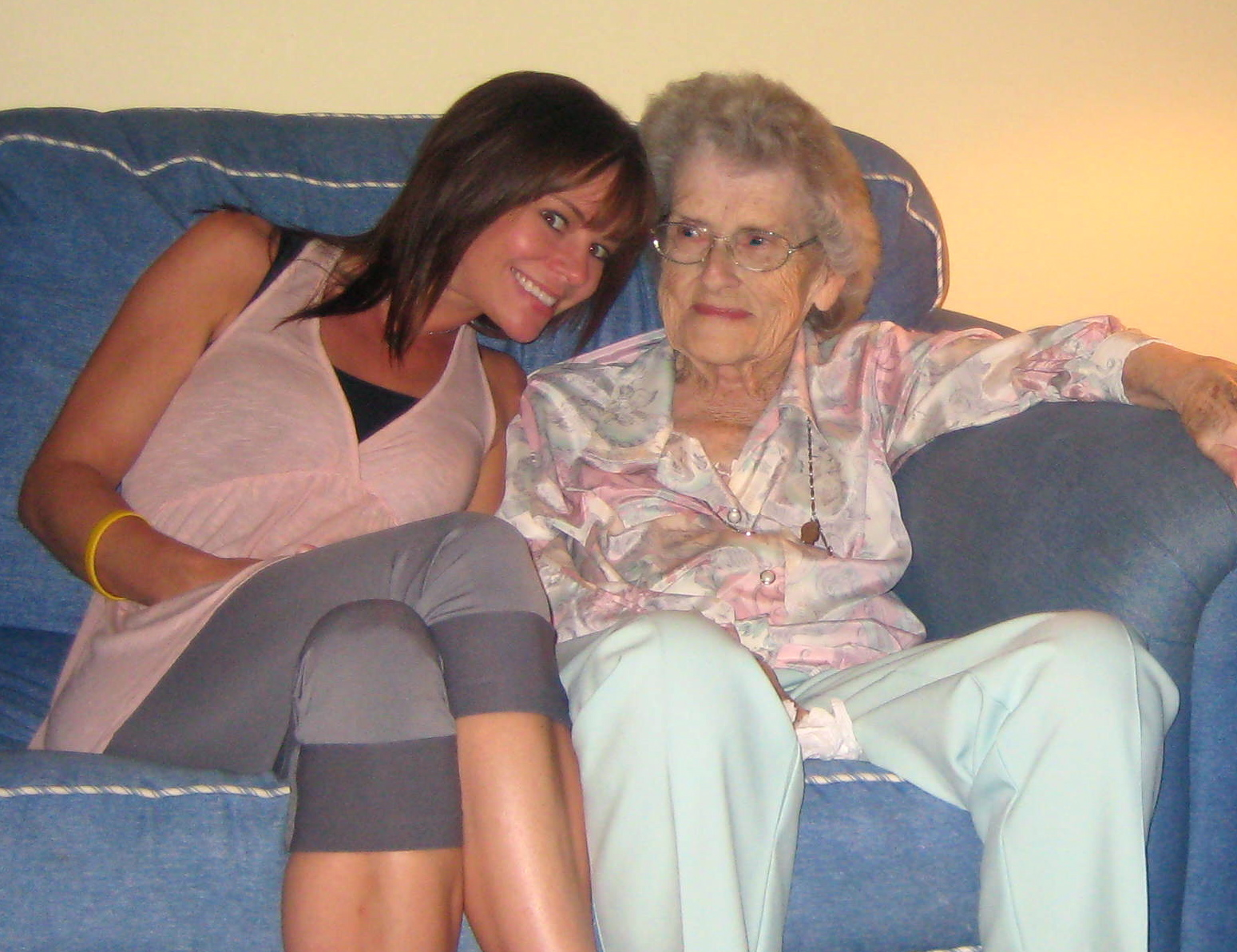
Grandma and Me in Charlotte, NC

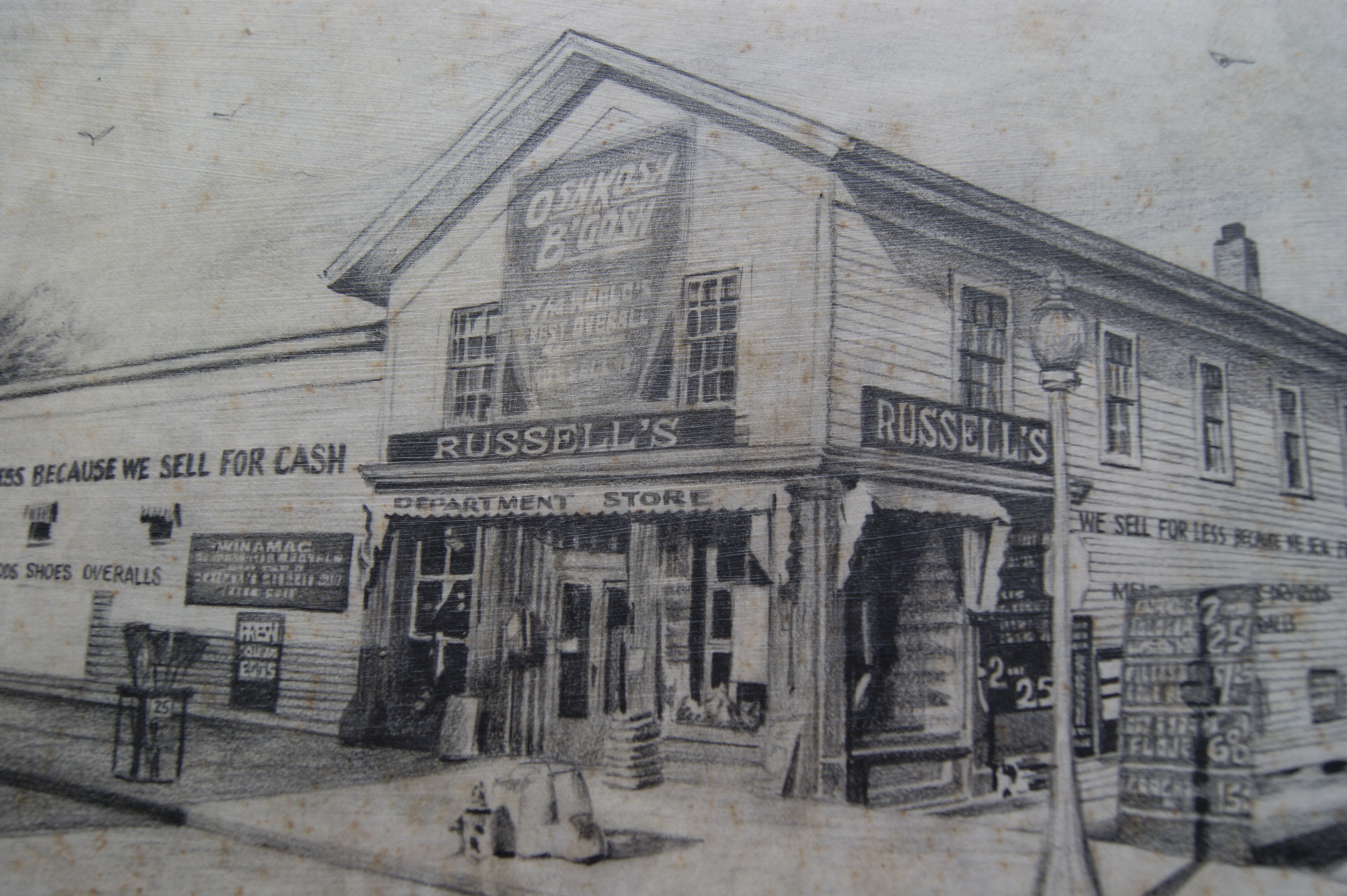
You might be surprised to know that my grandma Ogie was quite the volley balloon player.  This was a made up game that my sister and I used to play with her when we’d visit her house on Highway 14 across from the Tippecanoe River in Winamac, Indiana. Grandma would take two wooden chairs from the kitchen table, spread them out the width of the kitchen, and place a broomstick across the chairs so that we could swat a balloon back and forth over the wooden “net.” It was always my sister Anne and Ogie against myself. Other activities included a board game called Aggravation, regular walks across the back pasture to what was then Ben Franklin for a toy, and each fall we went to Russell’s Old Trading Post for school shoes.  There was a conveyor belt that went from the back room down to the basement and we used to ride it up and down.  The setting for my short story “Ye Olde Trading Post” in my novel Horseshoe was based on a drawing of the store as it used to be. My grandma and grandpa were fun.  As kids we weren’t afraid to break anything or make a big mess. Their house, and their lives for that matter, were for living.

Russell's Old Trading Post Winamac, Indiana Horseshoe faith God

sketch by John Sterling Lucas

(photo from artwork at Grandma’s house)

My grandma wrote me a lot of letters, and I’d like to use the content of those letters to write about the person she was. The letters have been coming my whole life, and I even received one as recently as this year.  I suppose at the peak of Grandma’s writing, she averaged about one every other month. Later than I would have hoped, I started saving thes letters. One of her latest is on my desk here in Connecticut where I live, and I have a file full of them in my office in New York. When I lay the letters from the past few years out in front of me, I can see the change in grandma’s handwriting, see how it became more painful and exhausting for her to write them for me.  I’d always intended to read from the letters at her funeral, but I was in a hurry to go see her in the last week of her life and I forgot them. It’s probably just as well because one of the lines near the end of most of the letters contained the phrase, “I don’t read them over.” The idea was that the letters had mistakes and if she read it over then she wouldn’t send them.  I don’t remember any mistakes. I think the line is more of an indication of Ogie’s humble way.  Her life was a life of service.  Service to those at the store, service to the people in her community, and service to her daughter Judy and her husband Bill in the time that preceded their deaths.

Olga Russell Aspen Winamac, Indiana William Torgerson death obituary funeral faith God prayer

Grandchild Aspen and Our Grandma

Whether I was nineteen or forty, Ogie’s letters contained a twenty dollar bill and the instructions to “Go eat!” That twenty dollar bill indicates how determined Ogie was to share her blessings. Whether it was money, something in her house, or love, Ogie was determined to give it away. Let’s say my cousin Aspen’s air conditioning broke. Ogie would often chip in to help fix it, and then without my sister Anne or I even knowing what had happened, we would receive a check in the mail for the exact amount that Ogie had given Aspen. I remember being in middle school when I was walking through the mall with my grandma.  We stopped at one of those talking parrots where you say something to the parrott, it records your voice, and says what you said back. I probably laughed and made a passing comment about the toy, and then I received the bird the following Christmas. You had to be careful what you said to my grandma. The first time my wife Megan met Ogie, I warned Megan as we sat in the car outside in Grandma’s driveway, “Don’t tell her you like anything in the house.” Well, we got inside and later Megan complimented Ogie’s paperweight collection. “Which one do you want?” Ogie asked. There was no way my grandma was going to let Megan out of the house without taking the paperweight.  Thank goodness Megan didn’t compliment Ogie on the concrete deer that stood in her shrubbery.

Olga Russell Winamac, Indiana death obituary faith God prayer

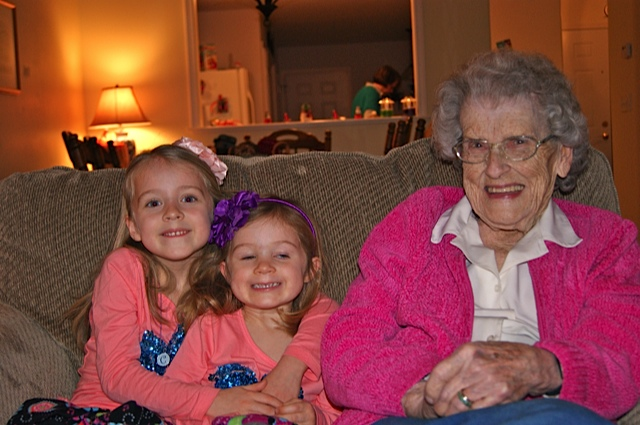
Ogie and her Great Grandchildren

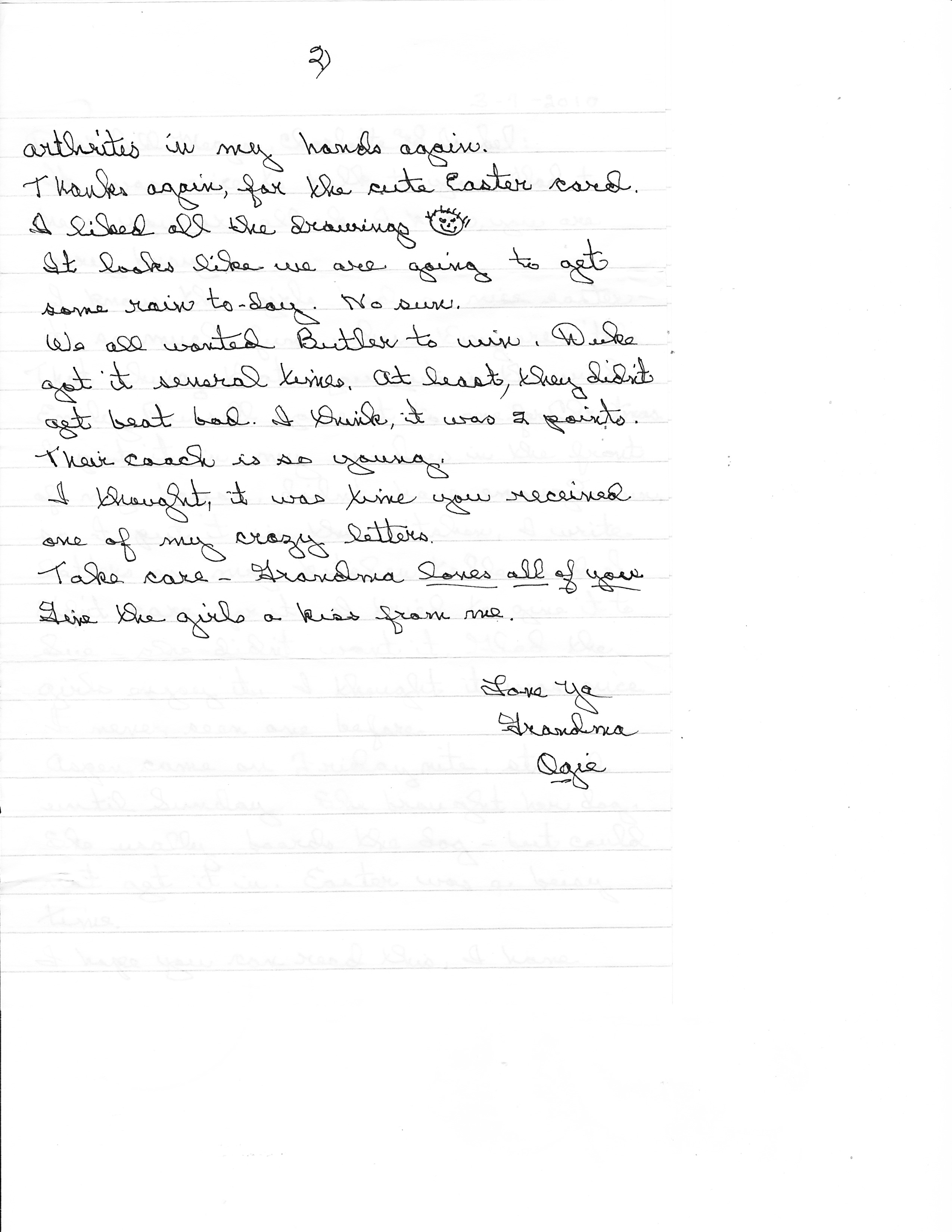
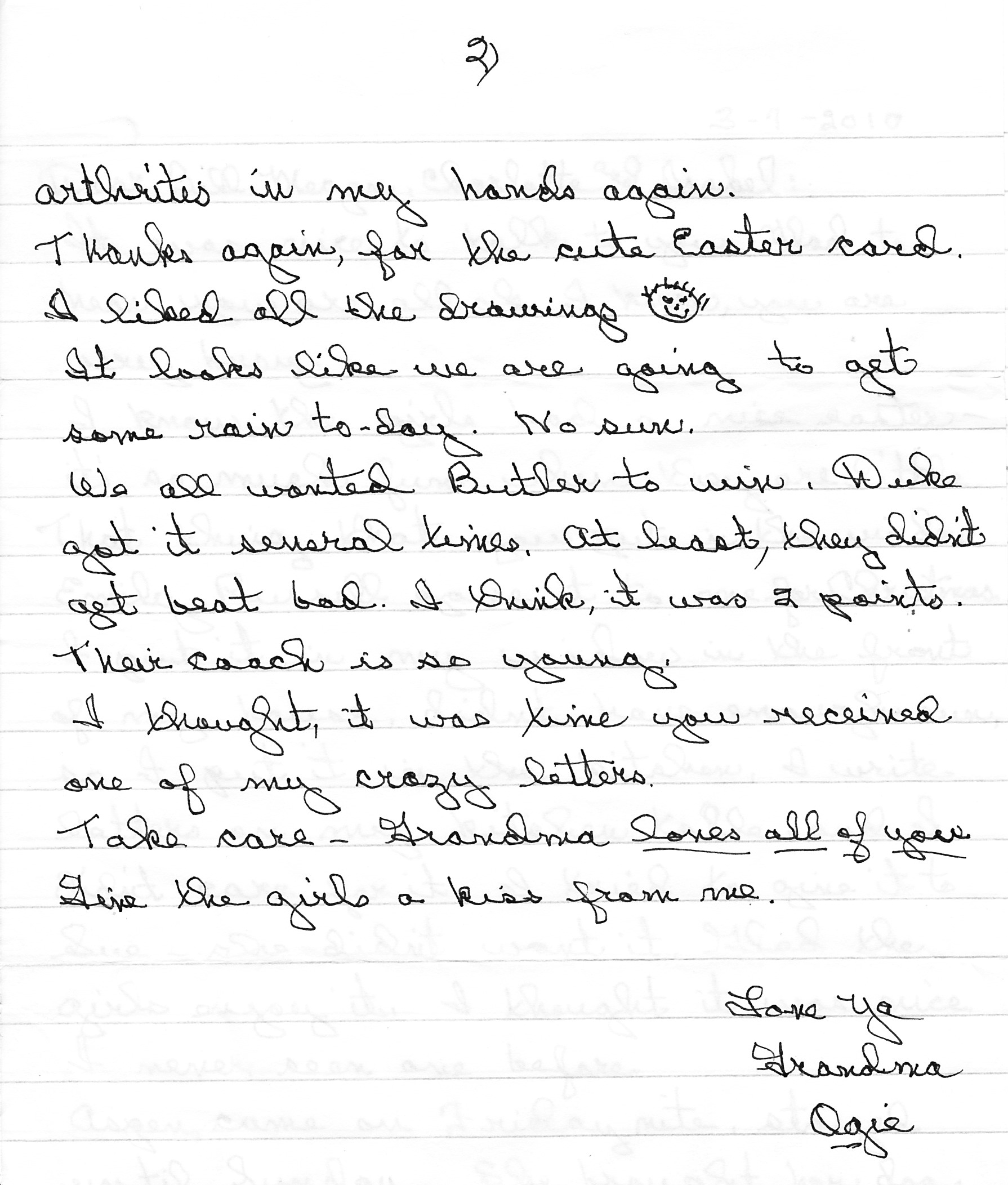
Ogie always drew a smiley face somewhere in her letter and sometimes there was a big yellow sticker affixed to the back of the envelope.  It was an ordinary “Have a Nice Day” smiley face, except for that Ogie’s smiley faces had tight curly hair. I took the image to be Ogie’s self portrait, and it’s no accident that it’s a cheerful one. Ogie taught me a very important lesson: she showed me how to be sad about those we love who are gone but at the same time fill the life we have left with joy.  Just about every time I saw my grandma, she talked about how much she missed her daughter Judy and then later her husband Bill. Ogie showed me it was possible in one moment to be full of sadness remembering a loved one who was no longer with her, and then in the next minute say something to me that caused her shoulders to rock with laughter. She taught me a lesson I’ve tried to learn myself and now pass on to my daughters:  it’s often up to us whether or not we are going to go through life cranky and complaining, or whether we’re going to choose to be positive and try to help those around us.  Ogie was incredibly positive, even in the last week of life.


Olga Russell death obituary love God faith Russell's Old Trading Post Winamac, Indiana

a letter from Grandma 3/7/2010

As with my grandfather’s funeral, my mom asked the family to brainstorm adjectives to describe my grandma.  (as mom joked, “…apparently this is what English teachers do.”) Somebody suggested the word “stubborn,” and I know there was some doubt on my mom’s part whether or not such a word should be included at someone’s funeral. I can tell you there is a thread of stubborn that runs at least from my grandma Ogie through her daughters, to their children, and then to Ogie’s great grandchildren. When Ogie’s daughter Judy was a little girl, she said something that hurt my mom’s feelings. Grandpa and my mom were set to head off to work at the store, and Judy was told to sit on a step until she apologized to my mother.  Judy sat on the steps and refused to apologize. My mom and grandpa went to work. When they came home for lunch, Judy was still on the steps and still refusing to apologize. My grandma liked to tell that story.  As for her own stubbornness, when Ogie moved into my parents’ spare bedroom, I was told that as she came in with mom, my dad said something to the effect of, “Welcome to our home.” My grandmother’s response? “Thank you, but I don’t want to be here.” It wasn’t that my grandmother didn’t like my dad or my parents’ house. Right up until the end, Ogie was worried about everyone else, and she hated the idea that she was being a burden. She wasn’t. We were all so thankful to get to spend time visiting with her.

Without fail, Ogie’s letters always had a sentence that told me she was proud of me and that she loved me. When loved ones pass away, I often hear phrases that begin something like this: “If only I’d have known…Or, I wish I could have told her…”  This wasn’t the case with Ogie. My whole life, whether it was in person or through letters, both of my grandparents told me that they were proud of me and that they loved me.  They didn’t say this in passing. They told me in a shoulder grabbing, make full eye-contact, tell-me-twice kind of way, and that’s just one of the many ways that the lives of my Grandpa Bill and my Grandmother Olga will live on. My daughters will know that I am proud of them and that I love them. They have already played volley balloon ball across a broomstick and hunted plastic Easter eggs with treasures inside just like I did when I was a kid.

Bill and Olga Russell Winamac, Indiana Russell's Old Trading Post

My Grandparents: Bill and Olga Russell

My grandma and grandpa didn’t want anything in return for what they gave us. They wanted us to do the same for the family members who would come after us. They were able to help us financially, spiritually, and emotionally, and they hoped that someday we might be in position to do the same for somebody else. I told grandma during the last week of her life that she and grandpa will always be a part of why I do what I do. I will try to stay focused on taking actions which would make them proud. On the day my grandma died, she told me that my girls would grow up fast. She also said about dying, “It’s not hard. It doesn’t hurt.” Grandma did hurt some even thought she wouldn’t admit it, but we were very thankful that she was mostly comfortable. I didn’t see a bit of fear or doubt on Ogie’s part when it came to what was going to happen to her after death. That she passed away with miminal pain after having spent the week with her family, was exactly what she wanted. It was an answer her prayers and ours. My grandmother’s faith was strong and she was anxious to get to Heaven.  Thank the Lord for that.


What are you working on? Discussion in the Writing Classroom

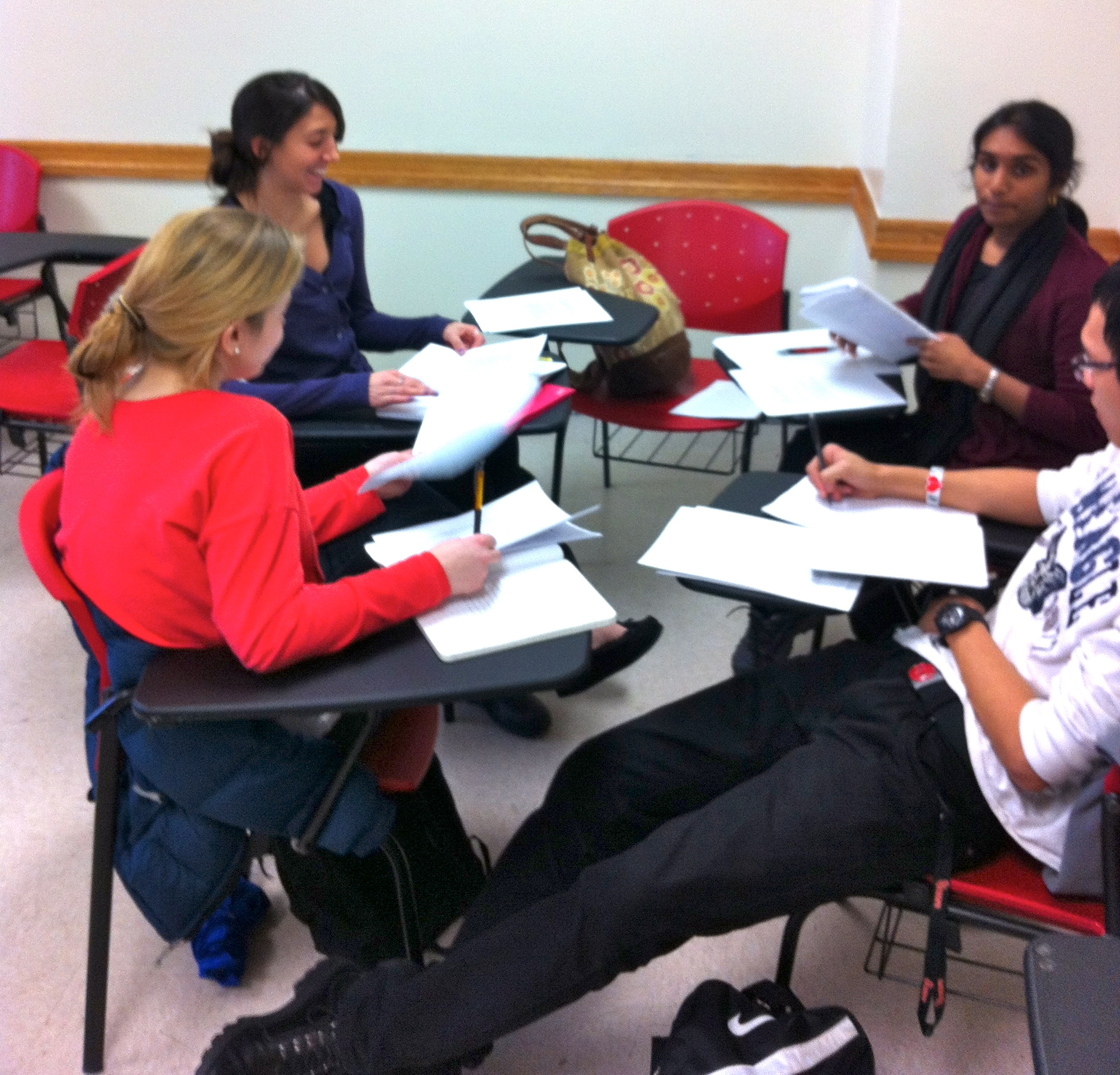
In the writing classrooms where I teach, we often sit in a circle and do a “quick share” to begin class where everyone offers a brief comment. Examples of what students might say include a golden line from a reading, a question for our fellow writers, or an observation about a project in progress they are working on. Beginning in this way helps me to avoid talking too much to start off the class, and I hope to encourage students who might otherwise just sit back and relax to try and engage actively with the activity of the course.

William Torgerson teaching writing research composition discussion college

the challenge of conversation


Even trying for rapid-fire sharing around the room, with up to twenty-five students, writers can get bored, feel left out, or be uncomfortable enough talking in front of a group that they don’t speak in a way that the students in the class can hear them.  Even if a student speaks two minutes out of fifty, that’s not much engagement or opportunity to be heard. In considering this problem, I’m taken back to my days as a basketball coach. I was always looking for ways to maximize our practice time and the opportunities each player had to improve. For example, if I were to put fifteen players in a line and have them shoot, get their own rebound, and then pass to the next player, then each player might get three shots in ten minutes.  This isn’t helping anyone very much and to my way of thinking, not so different than a student in a writing class who only gets to be heard once or twice. So what to do?

As a teacher, I often go back to my time as an athlete and then a coach. For me, developing as a writer has a lot in common with my development as a shooter of the basketball or training for a long run.  When I coached and wanted to get my players more practice, I arranged shooters into five lines of three, and all of the sudden each player got five times the amount of practice than if they were in one big-long line. The classroom version of this basketball solution would be to make use of small groups. Theoretically, a student in a small group has more opportunity to join a conversation about their reading and writing. However, I’ve been in small groups as a student and now as a faculty member, and I’m often not impressed with the sort of work that gets done. There’s often a lot of noise, but it doesn’t often seem to be the noise of conversation about reading and writing. If you want students (or faculty) to work in small groups, then there has to be a plan for how this conversation can flourish.  As someone who was beginning to get more and more interested in Twitter, I wondered about the possibility of using it to enhance classroom conversation.  More on that experiment in coming posts, and if you’ve got your own ideas about classroom discussion or the use of small groups, I’d love to hear them!

Torg Has Moved

I’ve moved into some new digital digs. Please click here to say hello. When you get to the new place, I hope you’ll take the time to subscribe for updates.  Thanks!

http://thetorg.com/

William Torgerson Winamac, Indiana Olivet Nazarene University Cusack Say Anything John Hughes Sixteen Candles Faith God fag writing teaching St. John's University
Click on image to visit new site!

Meet Torg

Seven years ago I made the switch from high school English teacher and basketball coach to writer and professor.  Since that time, I’ve been blessed to have been hired to teach First Year Writing courses at St. John’s University in New York. I write novels, scripts, publish a podcast, and have just sent out my first documentary film for consideration at several film festivals.

Cherokee McGhee Press has published two of my novels. The first, Love on the Big Screen, tells the story of a college freshman whose understanding of love has been shaped by late-eighties romantic comedies. In writing that book, I drew upon my early dating experiences, my time riding the bench of a small-college basketball team, and my devotion to 80s films such as Say Anything and Sixteen Candles.   My adaptation of that novel won the Grand Prize of the Rhode Island International Screenplay Competition.


80s Movies music John Cusack John Hughes Say Anything Olivet Nazarene lovea scene from the novel by artist Keegan Laycock


Horseshoe is my most recent novel and is set in a fictionalized version of my hometown, Winamac, Indiana. It’s a place where everyone knows everybody else’s business.  Writer Bryan Fuhurness endorsed the novel by writing, “What Sherwood Anderson would have written if he had a sense of humor.”

William Torgerson 80s romantic comedy Winamac Indiana Say Anything Cusack High Fidelity faith God healing service


I ask my students to write a hybrid research paper we call a Scholarly Personal Narrative. I think of Colin Beavan’s No Impact Man and Joan Didion’s Year of Magical Thinking as examples of this sort of text that combines a personal story with scholarly research.  The students also create short documentary films, follow Tweets in their area of interest, and compose ePortfolios as their final writing project.

In order to consider my professional life, I use a metaphor gifted to me by a former professor: Writing Floats on a Sea of Conversation. Given that, I invite you to respond to anything you find here as the first lines of what could be a rewarding conversation.  You can get in touch with me via Twitter @BillTorg or write me an email at William.Torgerson@gmail.com